How Much Can I Save by Avoiding a New 230V Circuit ($200 to $800)?
A 115V mini-split or other plug-in heating and cooling unit may save you the cost of installing a new 230V circuit—but only if the equipment is actually designed for 115V, your electrical panel and outlet can support it, and the unit can handle your garage’s heating and cooling load. Depending on the route and complexity, a new circuit may cost roughly $200 to $800 or more. Avoiding it could therefore save several hundred dollars up front.
That doesn’t automatically make a 115V unit the cheaper choice overall. The unit may have different capacity or efficiency, and your garage may need more heating and cooling than a bedroom of the same size. Before choosing equipment, compare the full project cost: unit, electrical work, mounting, line-set requirements, and expected operating costs.
Quick answer: potential savings from avoiding a 230V circuit
If an electrician confirms that a suitable existing 115V circuit can safely supply a listed, properly sized unit, you may avoid a new-circuit expense in the neighborhood of $200 to $800. Your actual electrician cost savings depend on the panel, distance to the garage, wiring route, and local labor rates. A long or difficult run, a full panel, or required upgrades can push the price higher.
Don’t treat an ordinary garage outlet as automatically suitable. The circuit’s breaker, wire size, outlet condition, other loads, and the equipment’s nameplate requirements all matter. A unit that needs a dedicated circuit cannot safely be plugged into a shared circuit just because the plug fits.
Decision factor Potential 115V advantage What to verify Electrical installation May avoid the cost of a new 230V run Voltage, breaker size, circuit capacity, and manufacturer instructions Equipment choice Some models may be more accessible for smaller spaces Heating and cooling capacity for your actual garage Operating cost Not inherently lower just because it uses 115V SEER2, HSPF2, local electricity rates, and use patterns Installation route May simplify a project if a compliant circuit is already available Panel-to-garage distance and the path for wiring and refrigerant linesWhy garage BTU sizing is different from sizing an interior room
Garage sizing is where many otherwise reasonable comparisons go wrong. A garage often has less insulation, a leaky overhead door, more air exchange, and greater exposure to outdoor temperatures than a finished room. It may also have a tall ceiling, a concrete slab, or vehicles and tools that add heat or affect how the space is used.
As a rough starting point, a garage may need 30% to 50% more capacity than an interior room of similar floor area. That is a rule of thumb, not a substitute for a load calculation. The right adjustment depends on insulation, air leakage, ceiling height, windows, climate, and whether you want year-round comfort or only occasional temperature control.
Check these garage conditions before comparing units
- Insulation: Check the walls, ceiling, and garage door. A well-insulated, sealed garage may need less capacity than a drafty one.
- Ceiling height: A high ceiling means more air to condition. Don’t size by floor area alone.
- Door and air leaks: Gaps around the overhead door and entry door can undermine comfort and increase runtime.
- Climate and use: A garage used as a workshop every day has different needs from one heated occasionally to protect stored items.
- Heating performance: In a cold-winter climate, check the manufacturer’s heating capacity at low outdoor temperatures—not just the headline rating.
An oversized unit is not a reliable fix for poor insulation or a leaky door. It can cost more to buy, may cycle differently, and still leave cold spots if the air distribution is poor. If you’re unsure, ask a qualified HVAC professional to assess the space rather than relying on a living-room BTU chart.
115V vs 230V cost: compare the whole installation
The main financial appeal of 115V is avoiding a new 230V circuit when the chosen unit allows it and the electrical setup is suitable. But voltage alone doesn’t determine installation cost or performance. A 230V model may can 115v mini split heat garage be the right option for the capacity you need, while a 115V model may be a practical fit for a smaller, well-insulated garage. Compare exact model specifications, not broad voltage labels.
What affects the panel-to-garage run length?
The panel to garage run length is one of the key factors in electrical cost. A short, accessible route may be relatively straightforward. A longer run, finished walls, an underground section, difficult framing, or limited access can require more labor and materials. The electrician also needs to check whether the panel has capacity and space for the required breaker.
Ask for an estimate that identifies the circuit, breaker, wiring route, any trenching or wall repair, and whether panel work is included. A quote that says only “install outlet” may not answer whether the circuit meets the equipment manufacturer’s requirements.
When a 115V unit may make sense
- The exact model is rated for 115V and its installation manual permits your intended setup.
- The unit’s capacity is adequate for the garage after accounting for insulation and ceiling height.
- A qualified person confirms that the existing circuit, receptacle, and breaker meet the unit’s requirements.
- The circuit is not already carrying other loads that could cause overloads or nuisance trips.
When a new 230V circuit may be the better choice
- The properly sized unit you need requires 230V.
- The manufacturer specifies a dedicated circuit or a particular breaker and conductor size.
- Your existing 115V circuit is shared, undersized, damaged, or otherwise unsuitable.
- You want a larger-capacity unit and the available 115V options do not meet the calculated load.
Never swap breakers or use an adapter to make a unit appear compatible. Follow the nameplate and installation manual, and have electrical work done by a qualified electrician in accordance with local code. A dedicated circuit is not an optional upgrade when the equipment requires one.
Zone Air vs MRCOOL: compare the specific DIY packages
Homeowners researching DIY mini-splits may come across Zone Air and MRCOOL. Rather than assuming every product under either name has the same features, compare the exact system and package you’re considering. MRCOOL offers DIY-oriented systems with model-specific installation instructions and connection requirements; verify the current manual for the unit you plan to buy. For Zone Air, ask what is included in the particular package and whether it is a complete system or requires additional components or professional work.
For either option, check the following before you put a price comparison side by side:
- Electrical specifications: Confirm voltage, minimum circuit ampacity, maximum overcurrent protection, and whether a dedicated circuit is required.
- Capacity and cold-weather output: Compare rated heating and cooling performance at conditions relevant to your garage and climate.
- Line-set details: Review included length, connection method, allowed routing, and whether extra refrigerant work is required.
- Installation scope: Find out what the DIY kit actually covers, what tools are required, and which tasks may need a professional.
- Warranty terms: Read the current warranty and installation conditions rather than relying on general marketing language.
- Mounting and drainage: Check the outdoor-unit clearances, condensate routing, and whether the mounting method suits your site.
One practical detail: don’t choose a kit that leaves you with extra line set that the instructions tell you to coil behind the condenser. That can create a messy installation and may not be permitted by the manufacturer. Confirm the included line length and approved routing before ordering.
SEER2 and HSPF2: what they mean for operating cost
SEER2 measures seasonal cooling efficiency, while HSPF2 measures seasonal heating efficiency under standardized test conditions. In general, higher ratings indicate greater efficiency in those tests, but they don’t tell you exactly what your garage will cost to heat or cool. Actual use depends on the weather, thermostat setting, insulation, air leakage, electricity rates, and how many hours the system runs.
For a useful comparison, look at the efficiency ratings alongside the unit’s capacity and low-temperature heating data. A high HSPF2 rating is not enough if the system cannot deliver the heating output your garage needs when outdoor temperatures drop. Likewise, a strong SEER2 rating cannot compensate for an undersized unit that runs constantly.
To estimate annual operating cost, use the manufacturer’s energy information when available and your local utility rate. Compare similar-capacity models and assume similar usage. The 115V versus 230V label alone does not reveal which system will cost less to run: operating cost is primarily about energy use and delivered comfort, not simply the supply voltage.
Don’t forget the outdoor-unit base and mounting
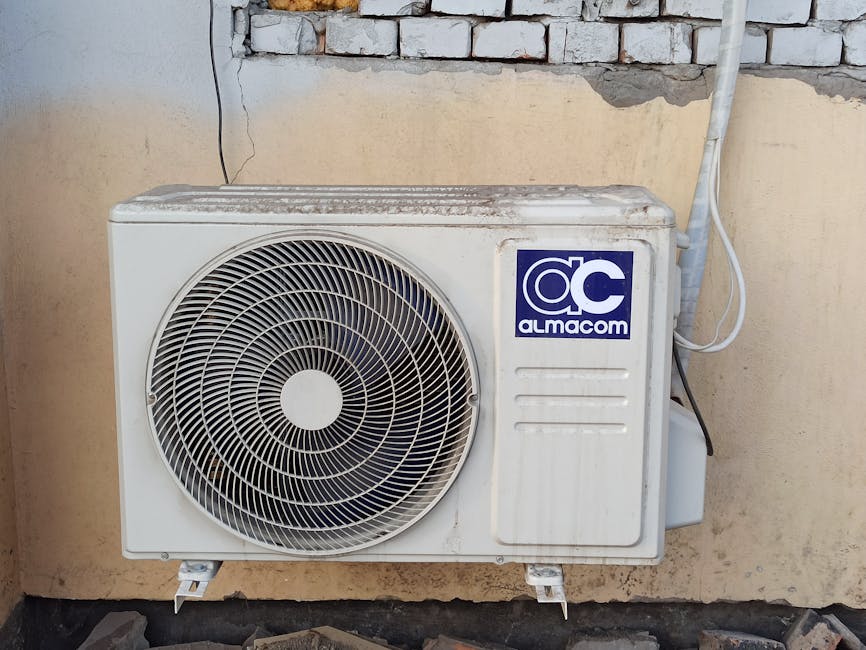
The outdoor condenser needs stable support, adequate clearance, and protection from water, snow, and debris. A condenser pad can provide a level ground base when the site and manufacturer instructions allow it. Wall brackets can raise the unit above snow or help where ground placement is impractical, but the wall and brackets must support the equipment and manage vibration appropriately.
Neither mounting option is automatically better. Check local snow depth, service access, manufacturer clearances, drainage, and the structure you’re attaching to. Include the pad or brackets in your project budget; avoiding electrical work doesn’t eliminate other installation costs.
How to decide whether the circuit savings are real
- Measure the garage. Record floor area, ceiling height, insulation, door condition, and how you plan to use the space.
- Shortlist correctly sized equipment. Compare actual heating and cooling capacity, including cold-weather performance, instead of choosing by square footage alone.
- Read the electrical section of the manual. Confirm voltage, breaker, circuit, and wiring requirements for the exact model.
- Ask an electrician to inspect the existing circuit and panel. Get a written estimate for a compliant new circuit if one is needed, including the panel-to-garage route.
- Compare total installed cost. Include equipment, electrical work, mounting, line-set needs, and any required professional labor.
- Compare efficiency and warranty terms. Use SEER2 and HSPF2 as part of the decision, not as a substitute for matching the equipment to the load.
Where Angi fits into the estimate
Angi can be one way to look for local electricians or request estimates, but treat any online cost range as a starting point rather than a quote. Provide the equipment model, panel details if known, and approximate route to the garage. Ask each contractor to specify whether the price includes a dedicated circuit, breaker, wiring, permits, trenching, and panel upgrades.
Getting more than one detailed estimate can help you distinguish a straightforward circuit installation from a project that needs substantial access or panel work. Make sure the person doing the electrical work is appropriately qualified and familiar with local requirements.
Bottom line: calculate savings without cutting corners
Avoiding a new 230V circuit can save about $200 to $800 when a suitable 115V unit matches the garage load and an existing circuit safely meets the manufacturer’s requirements. But that is a conditional saving—not a reason to choose an undersized unit or bypass a dedicated-circuit requirement.
Start with garage-specific sizing, then compare exact 115V and 230V models, electrical specifications, SEER2 and HSPF2 ratings, and the full installation scope. If the right system requires a new circuit, include that cost in the project budget. Paying for compliant wiring is better than gambling on an overloaded circuit, and it helps ensure the system you choose can heat and cool the garage you actually have.