What Are Collaborative Project Areas and How Are They Different from Desks?
As the workplace landscape shifts dramatically with the rise of hybrid work models, companies are rethinking their office designs to support evolving employee expectations and workflows. Traditional desks, once the mainstay of office design, are increasingly complemented or replaced by collaborative project areas that prioritize flexibility, interaction, and multi-purpose use. But what exactly are collaborative project areas, how do they differ from conventional desks, and why are they important today?
In this article, we’ll explore the concept of collaborative project areas, discuss how they align with contemporary work habits, and highlight key design considerations including balancing collaboration with privacy. Drawing insights from pioneers like Lum Chang Brandsbridge and authoritative research such as the Harvard https://www.lorddecor.com/blog/designing-offices-that-adapt-why-flexible-workspaces-are-the-future Business Review, we provide actionable ideas for employers and facility managers looking to optimize their office layout.
Understanding Collaborative Project Areas
Collaborative project areas are intentionally designed spaces within an office that encourage teamwork, brainstorming, and problem-solving by groups rather than individuals. Unlike standard desks—usually allocated for one person, often with fixed furniture—these areas are dynamic, often modular environments that accommodate varying group sizes and task types.
Key Characteristics of Collaborative Project Areas
- Flexibility: Furniture and technology can be reconfigured easily to adapt to different team needs.
- Multi-purpose zones: Spaces may double as meeting rooms, informal lounges, or workstations depending on time and use.
- Technology integration: Equipped with large screens, whiteboards, or video conferencing tools to support communication.
- Encouragement of interaction: Layouts foster face-to-face discussions, spontaneity, and creativity.
- Less permanence: Unlike assigned desks, these areas are often shared or hot-desking zones.
For example, Lum Chang Brandsbridge—a company known for innovative office solutions—has developed flexible team rooms which can quickly transition from collaborative brainstorming environments into focused project areas with ease. This versatility is critical in offices embracing hybrid schedules, where employees rotate between individual-focused and group-centric work days.
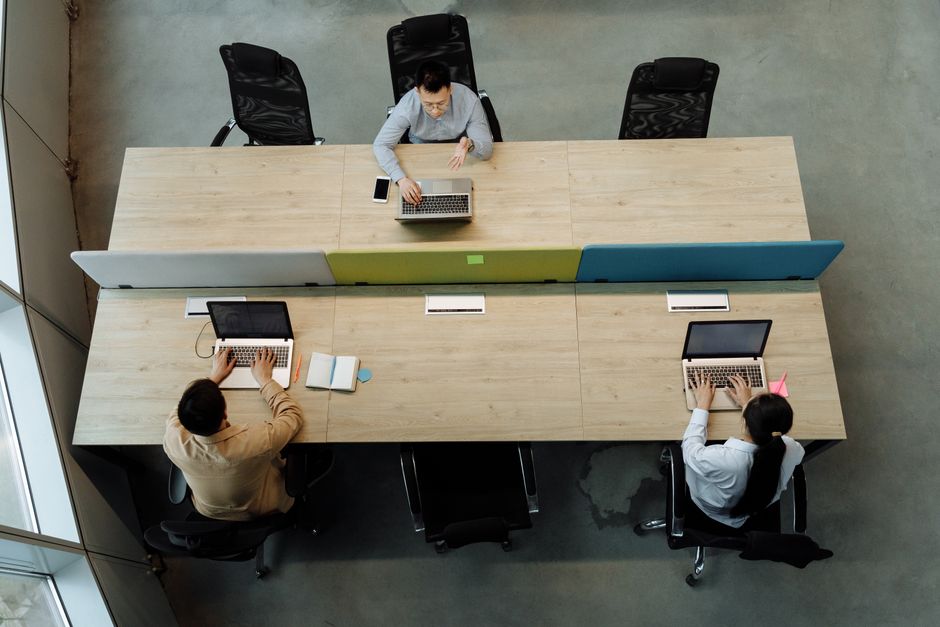
How Collaborative Project Areas Differ from Desks
At a glance, desks and collaborative areas might seem similar—both are spaces for work. However, they cater to fundamentally different work modes and support different human and organizational needs.
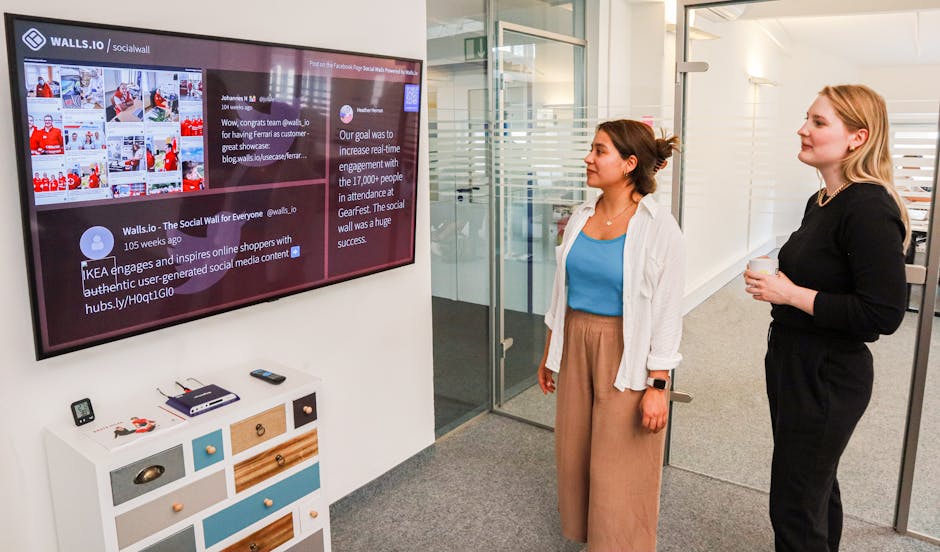
The Role of Hybrid Work and Changing Expectations
The global shift toward hybrid work—allowing employees to split time between remote and office work—has changed the way office spaces are used. According to studies from Harvard Business Review, workers value the office less for routine individual tasks (which can often be done remotely) and more for meaningful in-person collaboration, mentorship, and culture-building.
Consequently, traditional desks remain necessary but are less central. Office real estate is being repurposed for flexible workspace models featuring team rooms and collaborative project areas that accommodate diverse workstyles and spontaneous group interactions. Employees expect environments that:
- Support both focused work and teamwork in the same building.
- Offer privacy when needed but also promote transparency and connection.
- Can be easily adjusted for changing team sizes and tasks.
Companies like Lum Chang Brandsbridge have been at the forefront of designing and implementing these hybrid-capable spaces, combining modular furniture systems with seamless technology, responding directly to evolving expectations of modern knowledge workers.
Designing Collaborative Project Areas Based on Real Workflows
One common mistake in office design is creating aesthetically pleasing but functionally irrelevant spaces. Effective collaborative project areas arise from a deep understanding of actual daily workflows and team interactions. This approach aligns with recommendations from experts such as those published in Harvard Business Review, emphasizing data-driven and employee-informed planning.
To design project areas that truly enhance team productivity, consider:
- Mapping collaboration patterns: Identify who collaborates with whom, how often, and for what duration.
- Task variability: Anticipate differing needs such as quick huddles, long workshops, or digital collaboration requiring screens and cables.
- Privacy needs: Balance open spaces with soundproof team rooms or pods to allow confidential discussions or focused work within groups.
- Technology support: Ensure ready access to fast Wi-Fi, video conferencing, presentation tools, charging stations, and control simplicity.
By incorporating these factors, businesses can avoid the “one-size-fits-all” pitfall and instead create versatile zones that increase engagement and reduce downtime.
Balancing Collaboration with Privacy in Flexible Workspaces
While collaborative spaces are vital, privacy remains essential for certain tasks. Striking the right balance ensures employees can switch seamlessly between teamwork and concentration. The key lies in flexibility:
- Acoustic zoning: Use sound-absorbing panels, ceiling baffles, and floor materials to reduce noise bleed.
- Spatial separation: Locate collaborative areas away from quiet zones or desks designed for deep work.
- Adjustable furniture: Movable partitions or desks with privacy screens allow territorial customization.
- Behavioral guidelines: Clarify etiquette and noise expectations to respect differing modes of work.
Modern workplace consultants, including those working with Lum Chang Brandsbridge, often recommend layered approaches: combining informal lounges and open hubs with enclosed team rooms and silent booths—thus creating a gradient of focus, collaboration, and privacy options.
Visualizing Collaborative Project Areas
To envision how these areas look and feel, consider examples hosted on cloud platforms such as Squarespace CDN, which powers many creative businesses’ image galleries. These examples showcase bright, flexible layouts with modular seating clusters, large project tables, interactive whiteboards, and communal charging hubs.

The key takeaway: collaborative project areas encourage spontaneous, rich human interaction supported by adaptable furniture and embedded technology, far surpassing the stationary, individual-oriented desk model.
Conclusion: The Future is Collaborative and Flexible
Ultimately, collaborative project areas are not just a trend but a necessary evolution in office design reflecting the modern, hybrid workforce. Unlike traditional desks, they provide multi-purpose, technologically enhanced spaces to nurture teamwork and creativity without sacrificing privacy and individual focus.
Forward-thinking companies such as Lum Chang Brandsbridge are setting benchmarks by designing environments tailored to real workflows and flexible usage, supported by research insights like those from Harvard Business Review. For organizations planning office upgrades or new builds, prioritizing these spaces can directly enhance engagement, productivity, and employee satisfaction.
Whether you manage facility teams or lead workplace transformation projects, consider how collaborative project areas and flexible workspaces can reshape your environment and better support your teams in this new era of work.